Published by Garvin Accounting Solutions | Protecting Florida Businesses from Preventable Tax Disasters
Let me tell you a story that still keeps me up at night.
A few years ago, a Tampa restaurant owner walked into my office—not for a consultation, but because the IRS had just slapped him with a $47,000 tax bill plus penalties and interest.
The kicker? Most of it was completely avoidable.
He’d made a series of “simple” mistakes that snowballed into a financial nightmare. Mixing personal and business expenses. Not tracking receipts. Paying contractors under the table. Guessing at his quarterly tax payments instead of calculating them properly.
Each mistake seemed small at the time. “I’ll fix it later,” he told himself. “It’s not that big of a deal.”
Until it was.
I see this happen far too often with Florida business owners. You’re so focused on growing your business, serving customers, and managing daily operations that tax compliance falls to the bottom of your priority list. And by the time you realize there’s a problem, you’re staring down the barrel of IRS penalties, interest charges, and potential audits.
Here’s the good news: Most tax mistakes are completely preventable. You don’t need a PhD in accounting—you just need to know what NOT to do.
Today, I’m going to walk you through the 10 most costly tax mistakes I see Florida business owners make, exactly what they cost you, and most importantly—how to avoid them.
Because I don’t want you to be the next person sitting in my office with a five-figure IRS bill and a pit in your stomach.
Mistake #1: Mixing Personal and Business Finances
The Mistake:
Using the same bank account and credit card for both personal and business expenses. Paying for your groceries with your business credit card. Depositing business income into your personal checking account. Treating your business bank account like a piggy bank.
Why Florida Business Owners Do This:
“It’s easier to just use one account.” “My business is small, so it doesn’t matter.” “I can keep track of it in my head.”
No, you can’t. Trust me.
The Real Cost:
Financial Impact:
- Missed deductions: $3,000-$10,000+ annually because you can’t distinguish business from personal
- IRS audit risk: Significantly higher—mixed accounts are red flags
- Lost legal protection: If you’re an LLC or corporation, commingling funds can “pierce the corporate veil” and expose your personal assets to business liabilities
- Wasted time: Hours spent sorting through transactions trying to figure out what was business vs. personal
Real Florida Example:
Miami graphic designer uses personal checking for everything:
- Can’t identify which expenses are business deductions
- Misses approximately $8,000 in legitimate deductions
- Tax overpayment: $1,920 (24% bracket)
- Plus: Spends 20 hours at tax time trying to sort everything out
- Value of lost time: $1,000+ (at $50/hour)
- Total cost: $2,920+ annually
How to Fix It (Starting Today):
- Open a dedicated business bank account (most Florida banks offer free small business checking)
- Get a business credit card (even if it’s just one card)
- Set up a system:
- ALL business income goes into business account
- ALL business expenses come from business account/card
- Pay yourself a regular “salary” or owner’s draw from business to personal
- Never cross the streams (yes, Ghostbusters reference—but seriously, never)
Cost to implement: $0 (free business checking) to $50/year (business credit card with no annual fee) Savings: $3,000-$10,000+ annually
This is the single most important thing you can do for your business finances. Non-negotiable.
Mistake #2: Not Keeping Receipts and Documentation
The Mistake:
Throwing away receipts. Not logging business mileage. Failing to document the business purpose of expenses. Assuming “the IRS will just believe me.”
Why Florida Business Owners Do This:
“I’ll remember what it was for.” “It’s just a small expense.” “My bank statement is enough proof, right?”
Wrong.
The Real Cost:
IRS Audit Scenario:
The IRS audits you and asks for proof of $15,000 in business meal deductions. You don’t have receipts or documentation of who you met with or what was discussed.
Result:
- Disallowed deductions: $15,000
- Additional tax owed: $3,600
- Accuracy penalty (20%): $720
- Interest: ~$400 (depending on how long it’s been)
- Total cost: $4,720
Plus the stress, time, and potential for deeper investigation into other areas of your return.
IRS Documentation Requirements:
For expenses over $75:
- Receipt showing amount, date, and vendor
- Business purpose documented
- Who attended (for meals/entertainment)
For mileage:
- Date of trip
- Starting location
- Ending location
- Business purpose
- Miles driven
For ALL deductions:
- Proof of payment
- Business relationship/purpose
The “Cohan Rule” Exception:
Yes, there’s an old tax court case (Cohan v. Commissioner) that says if you can prove an expense occurred but don’t have exact records, you might get a partial deduction.
But here’s reality: Do you really want to argue with the IRS and hope for maybe 50% of your deductions? Or would you rather just keep receipts and claim 100%?
How to Fix It (Starting Today):
Digital Receipt System:
- Take photos immediately: As soon as you get a receipt, snap a photo with your phone
- Use apps that capture receipts:
- Expensify (free version available)
- Receipt Bank / Dext
- Keeper Tax (finds deductions for you)
- QuickBooks Online (built-in receipt capture)
- Add business purpose right away: “Lunch with Sarah Johnson – discussed website redesign proposal”
- Backup everything: Cloud storage (Google Drive, Dropbox) organized by month/year
Mileage Tracking:
- Automatic tracking apps:
- MileIQ (highly recommended)
- Everlance
- Hurdlr
- These apps automatically:
- Track every trip using GPS
- Let you swipe to classify as business/personal
- Generate IRS-compliant mileage logs
- Calculate your deduction
Cost to implement: $0-$10/month for apps Time investment: 2 minutes per expense Potential savings: Thousands in preserved deductions
Mistake #3: Misclassifying Workers (Employee vs. Independent Contractor)
The Mistake:
Treating employees as independent contractors (1099) instead of employees (W-2) to avoid paying payroll taxes, workers’ comp, and benefits.
Why Florida Business Owners Do This:
“It’s cheaper and easier.” “Everyone in my industry does it this way.” “They work part-time, so they’re contractors, right?”
Not necessarily.
The Real Cost:
This is a massive mistake that can bankrupt businesses.
If the IRS determines you’ve misclassified employees:
- Back payroll taxes: Employer’s share of Social Security and Medicare (7.65% of all wages paid)
- Penalties: Up to $50 per W-2 not filed, plus percentage-based penalties
- Interest: Compounding from when taxes should have been paid
- State consequences: Florida workers’ comp violations, unemployment insurance issues
- Employee claims: Workers can sue for benefits they should have received
Real Florida Case Study:
Orlando construction company with 5 “contractors” working full-time, using company equipment, following company schedule:
- Annual wages paid: $200,000 (5 workers × $40,000 each)
- IRS reclassifies them as employees after audit
- Employer payroll taxes owed: $15,300
- Penalties: $5,000+
- Interest: $2,500+
- Workers’ comp premiums (retroactive): $12,000+
- Legal fees: $8,000
- Total cost: $42,800+
Plus ongoing higher costs for proper classification going forward.
IRS Worker Classification Test:
The IRS uses a behavioral, financial, and relationship test:
Red Flags You’ve Misclassified (They’re Really Employees):
❌ You control when, where, and how they work ❌ They work exclusively for you ❌ You provide tools, equipment, and workspace ❌ They follow your schedule and processes ❌ They receive training from you ❌ The relationship is ongoing (not project-based) ❌ They’re integrated into your business operations ❌ You reimburse their expenses
True Independent Contractors:
✅ Control their own schedule and methods ✅ Work for multiple clients ✅ Use their own equipment ✅ Set their own rates ✅ Can hire assistants ✅ Take on financial risk ✅ Provide services available to the general public
How to Fix It:
Option 1: Reclassify Properly
If they’re really employees, bite the bullet and:
- Set up payroll (use Gusto, QuickBooks Payroll, ADP)
- Withhold taxes properly
- Pay employer share of payroll taxes
- Get workers’ comp insurance
- Comply with employment laws
Yes, it costs more upfront. But it’s WAY cheaper than an IRS audit.
Option 2: Restructure the Relationship
If you want to legitimately use contractors:
- Give them control over how/when they work
- Stop providing equipment
- Use written contracts specifying independent contractor relationship
- Don’t require exclusivity
- Pay per project, not hourly
Option 3: File Form SS-8
If you’re unsure, you can ask the IRS to determine the classification. (Warning: This invites scrutiny, so only do this if you’re genuinely uncertain.)
Cost to implement: $500-$2,000/year per employee for proper payroll setup Cost of NOT fixing it: $10,000-$100,000+ if caught
This is not an area to cut corners.
Mistake #4: Missing Quarterly Estimated Tax Payments
The Mistake:
Not making quarterly estimated tax payments (or severely underpaying them) and getting hit with penalties and interest in April.
Why Florida Business Owners Do This:
“I’ll just pay it all when I file.” “I forgot the deadline.” “Cash flow is tight—I’ll catch up next quarter.”
The Real Cost:
Underpayment Penalty Example:
Jacksonville consultant owes $30,000 in taxes for 2025 but makes no quarterly payments.
IRS Penalties:
- Underpayment penalty: Approximately 8% annually (varies by IRS interest rates)
- Calculation: Roughly $1,200-$1,800 for the year
- Interest: Compounds daily on unpaid tax
- Additional interest: ~$600-$1,000
Total unnecessary cost: $1,800-$2,800
That’s money thrown away that could’ve been avoided by simply paying quarterly.
Worse Scenario:
Business owner doesn’t save for taxes at all, spends the money, and in April can’t pay the $30,000 owed:
- Failure-to-pay penalty: 0.5% per month (up to 25%)
- Interest: Continues compounding
- Collection actions: IRS liens, levies, wage garnishment
- Payment plan fees: $31-$225 setup fee
- Stress: Priceless (in a bad way)
How to Fix It:
Mark Your Calendar:
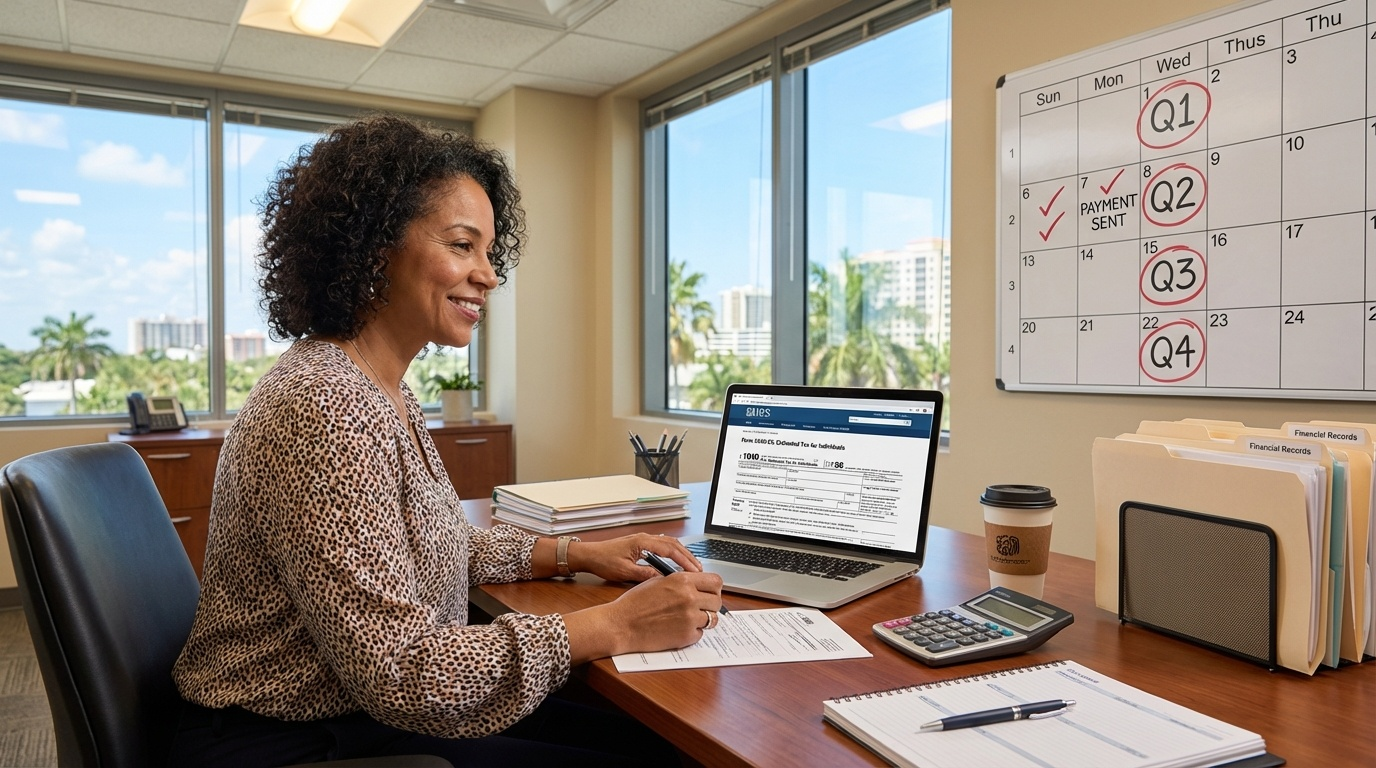
2025 Quarterly Deadlines:
- Q1: April 15, 2025
- Q2: June 16, 2025
- Q3: September 15, 2025
- Q4: January 15, 2026
Calculate Properly:
Use the safe harbor method:
- Pay 100% of last year’s tax (110% if income over $150K)
- Divide by 4 for quarterly amount
- You’re protected from penalties even if you owe more in April
Automate It:
- Set up EFTPS (Electronic Federal Tax Payment System)
- Schedule all 4 payments at the beginning of the year
- Set it and forget it
Set Aside Money:
- Open separate “Tax Savings” account
- Transfer 25-30% of every payment you receive
- When quarterly deadline hits, money’s ready
Cost to implement: $0 (EFTPS is free) Savings: $1,500-$5,000+ in avoided penalties annually
Mistake #5: Choosing the Wrong Business Structure (And Overpaying Taxes)
The Mistake:
Operating as a sole proprietorship when you should be an S-Corp. Or vice versa. Or staying in a structure that made sense 5 years ago but doesn’t anymore.
Why Florida Business Owners Do This:
“I started as a sole proprietor and never thought about changing.” “I don’t want to deal with the extra paperwork.” “I’m not sure what structure is best.”
The Real Cost:
Sole Proprietor vs. S-Corp Example:
Tampa marketing consultant nets $120,000/year as sole proprietor:
Sole Proprietor Taxes:
- Self-employment tax: 15.3% on $120,000 = $18,360
- Income tax: ~$15,000 (depends on deductions)
- Total tax: ~$33,360
S-Corp Taxes (Same $120K income):
- Reasonable salary: $60,000 (required)
- Distributions: $60,000
- Self-employment tax on salary only: 15.3% on $60,000 = $9,180
- Income tax: ~$15,000 (similar)
- Total tax: ~$24,180
Annual tax savings: $9,180
Over 5 years: $45,900 in saved taxes.
But There Are Costs:
- Payroll setup and processing: $500-$1,500/year
- Bookkeeping (more complex): $1,000-$2,000/year extra
- Annual corporate tax return: $500-$1,000
Total extra costs: ~$2,000-$4,500/year
Net savings: Still $4,680-$7,180/year
When S-Corp Makes Sense:
Generally, when your business nets $60,000+ after expenses.
Below that, the administrative costs outweigh the tax savings.
Other Structure Considerations:
LLC (Taxed as S-Corp):
- Liability protection
- Tax flexibility
- Less formal than traditional corporation
- Best for: Most Florida small businesses earning $60K-$500K
C-Corporation:
- Flat 21% corporate tax rate
- Double taxation (corporate + personal) unless retaining earnings
- Best for: Businesses planning to raise investment capital or retain significant earnings
Sole Proprietorship:
- Simplest structure
- No legal separation between you and business
- Best for: Side hustles, very small businesses (under $50K net income)
How to Fix It:
- Calculate your net business income (after expenses)
- Model different structures with your accountant
- Consider administrative burden vs. tax savings
- If changing structure makes sense:
- File appropriate paperwork with Florida Division of Corporations
- File IRS Form 2553 for S-Corp election
- Set up payroll
- Update business licenses and accounts
Cost to implement: $1,000-$3,000 (formation + professional fees) Annual savings: $5,000-$15,000+ (depending on income level)
Garvin Accounting can help you model this and determine what’s best for YOUR situation.
Mistake #6: Not Tracking Business Mileage
The Mistake:
Driving all over Florida for business—client meetings, vendor visits, bank runs, networking events—and not logging a single mile.
Why Florida Business Owners Do This:
“It’s too much hassle.” “I’ll remember the trips later.” (No, you won’t.) “I don’t drive that much for business.” (Yes, you do.)
The Real Cost:
2025 IRS Standard Mileage Rate: 67 cents per mile
Real Florida Scenario:
Fort Myers real estate agent drives approximately:
- Client showings: 200 miles/month
- Open houses: 100 miles/month
- Office meetings: 50 miles/month
- Networking events: 50 miles/month
- Total: 400 miles/month × 12 = 4,800 miles/year
Deduction: 4,800 × $0.67 = $3,216 Tax savings: $3,216 × 24% = $772
But she doesn’t track mileage, so she loses $772 in tax savings every single year.
Over 10 years: $7,720 lost (not accounting for potential mileage rate increases).
Higher Mileage Example:
Orlando contractor drives:
- Job sites: 500 miles/month
- Supply runs: 200 miles/month
- Client meetings: 100 miles/month
- Total: 800 miles/month × 12 = 9,600 miles/year
Deduction: 9,600 × $0.67 = $6,432 Tax savings: $6,432 × 24% = $1,544/year
Over 10 years: $15,440 lost.
That’s literally a free vacation to Europe you’re giving the IRS.
What Counts as Business Mileage:
✅ Client meetings ✅ Vendor visits ✅ Bank runs for business ✅ Office supply runs ✅ Networking events ✅ Post office for business mail ✅ Job sites/project locations ✅ Meeting with your accountant (yes, driving to see us!) ✅ Business conferences and events ✅ Picking up business-related items
❌ Commuting from home to regular workplace (not deductible) ❌ Personal errands
How to Fix It:
Use Automatic Mileage Tracking Apps:
MileIQ (My top recommendation):
- Automatically detects drives
- Swipe right for business, left for personal
- Generates IRS-compliant reports
- ~$6/month
Everlance:
- Similar auto-tracking
- Also tracks expenses
- Free version available
Hurdlr:
- Auto-mileage tracking
- Expense tracking
- Income tracking
- Free for basic features
Manual Tracking (If You Must):
Keep a mileage log in your car:
- Date
- Starting location
- Ending location
- Business purpose
- Miles driven
Cost to implement: $0-$72/year (MileIQ annual subscription) Savings: $500-$3,000+ annually depending on mileage
ROI: 10x-50x your investment in the app
Mistake #7: Paying for Everything in Cash (And Having Zero Paper Trail)
The Mistake:
Operating a cash-heavy business and not depositing business income. Paying contractors and vendors in cash. Keeping no records of cash transactions.
Why Florida Business Owners Do This:
Sometimes it’s innocence: “Cash is easier.” Sometimes it’s intentional: “I don’t want to pay taxes on all my income.” (Don’t do this.)
The Real Cost:
Legal/IRS Perspective:
Operating in cash without proper documentation is an IRS red flag for:
- Underreporting income
- Tax evasion
- Failure to issue required 1099s
If the IRS audits you:
- No records = no deductions: Can’t prove expenses without documentation
- Income reconstruction: IRS will estimate your income (usually unfavorably)
- Penalties: 20% accuracy penalty if “substantial understatement”
- Fraud penalties: 75% if deemed intentional
- Criminal prosecution: In severe cases
Real Florida Case:
Miami food truck owner operates 80% in cash:
- Deposits only $60,000 to bank account
- Actual income: $150,000
- Unreported income: $90,000
If audited:
- Additional tax owed: ~$27,000
- Fraud penalty (75%): $20,250
- Interest: ~$3,500
- Total: $50,750+
Plus potential criminal charges.
Even If You’re Honest:
Cash transactions without documentation means:
- Can’t prove deductions
- Can’t verify business expenses
- Lose thousands in legitimate write-offs
How to Fix It:
For Cash-Based Businesses:
- Deposit ALL cash into business bank account
- Use point-of-sale system that tracks cash sales (Square, Clover, Toast)
- Create cash log: Daily cash receipts
- Issue receipts for all cash transactions
- Reconcile daily: Cash drawer should match sales records
For Cash Payments You Make:
- Get written receipts for every payment
- Document: Who, what, when, how much, business purpose
- Take photos of receipts immediately
- Switch to checks or cards whenever possible for automatic paper trail
Cost to implement: $0-$50/month (POS system) Savings: Thousands in preserved deductions + avoiding IRS nightmare
Mistake #8: Ignoring Sales Tax (For Florida Businesses That Should Collect It)
The Mistake:
Running a business that should collect Florida sales tax but not registering, collecting, or remitting it.
Why Florida Business Owners Do This:
“I didn’t know I had to collect sales tax.” “I’m too small—nobody will notice.” “Sales tax is confusing, so I just ignore it.”
The Real Cost:
Florida Sales Tax Rate: 6% state + 0-2.5% county = 6-8.5% total (depending on location)
If you should have been collecting but weren’t:
Florida Department of Revenue can:
- Assess back taxes: Full amount you should have collected (even though you didn’t)
- Penalties: 10% per month (up to 50%)
- Interest: Compounds monthly
- Collection actions: Liens, levies, business closure
Example:
Tampa retail boutique should collect sales tax but doesn’t:
- Annual sales: $200,000
- Sales tax rate: 7.5%
- Sales tax should have collected: $15,000/year
After 3 years of non-compliance:
- Back taxes owed: $45,000
- Penalties (50%): $22,500
- Interest: $5,000
- Total: $72,500
And the business owner is personally liable even if operating as an LLC.
This can destroy your business.
Who Needs to Collect Florida Sales Tax:
✅ Retail stores ✅ Restaurants and food service ✅ Online stores shipping to Florida customers ✅ Service providers offering taxable services ✅ Event vendors
Taxable services in Florida include:
- Commercial cleaning
- Detective services
- Pest control
- Commercial pest control
- Nonresidential property repairs (some)
Exempt services:
- Most professional services (accounting, legal, consulting)
- Medical services
- Educational services
- Most residential services
Not sure? Check Florida Department of Revenue website or ask your accountant.
How to Fix It:
If You Should Be Collecting:
- Register for Florida sales tax certificate: Florida Department of Revenue website (free)
- Set up collection system: Add sales tax to invoices/point of sale
- Track sales tax collected: Keep in separate account
- File returns: Monthly, quarterly, or annually (depends on volume)
- Remit collected tax: On time (penalties are harsh)
If You Haven’t Been Collecting:
- Start immediately
- Contact Florida DOR: Voluntary disclosure may reduce penalties
- Work with tax professional: Navigate the compliance process
- Set up payment plan if needed for back taxes
Cost to implement: $0 (registration is free) + time to file returns Cost of not fixing: Business-ending debt
Mistake #9: DIY Tax Prep When Your Situation Is Too Complex
The Mistake:
Using TurboTax or doing your own taxes when you have:
- Multiple income streams
- Employees or contractors
- Significant deductions
- Business equipment purchases
- Complex business structure
Why Florida Business Owners Do This:
“I want to save money on accounting fees.” “Tax software says it can handle it.” “How hard can it be?”
The Real Cost:
Missed Opportunities:
A professional accountant doesn’t just file your tax return—we:
- Identify deductions you didn’t know existed
- Optimize your business structure
- Plan strategically for future years
- Ensure compliance (avoiding penalties)
- Save you dozens of hours
Real Comparison:
Sarasota e-commerce business owner ($250K revenue, $80K profit):
DIY TurboTax Approach:
- Time spent: 20 hours
- Deductions found: $25,000
- Tax owed: $18,000
- Penalties for mistakes: $500
- Total cost (time + penalties): $1,500 (20 hrs × $50/hr) + $500 = $2,000
Professional Accountant:
- Cost: $2,500
- Time spent: 2 hours (gathering documents)
- Deductions found: $35,000
- Tax owed: $15,600
- Penalties: $0
- Tax savings: $2,400
- Time savings: $900 (18 hours × $50/hr)
- Net benefit: $2,400 + $900 – $2,500 = $800 profit (plus peace of mind)
And the accountant provides:
- Year-round advice
- Quarterly tax planning
- Quick answers to questions
- Audit support if needed
When You Need a Professional:
✅ Business income over $75,000 ✅ Employees or multiple contractors ✅ Significant equipment or vehicle purchases ✅ Multiple business entities ✅ Out-of-state sales or operations ✅ Inventory management ✅ Real estate investments ✅ You’ve received an IRS notice ✅ You value your time and sanity
How to Fix It:
Find the Right Accountant:
Look for:
- Proactive tax planning (not just tax prep)
- Small business specialization
- Industry experience (your specific industry if possible)
- Year-round availability
- Technology integration (works with your accounting software)
- Communication style you’re comfortable with
At Garvin Accounting Solutions:
- We don’t wear stuffy suits
- We speak plain English
- We’re available year-round (not just tax season)
- We proactively identify savings opportunities
- We focus on Florida businesses (we understand your unique situation)
Cost: $1,500-$5,000/year (depending on complexity) Typical savings: 3-10x the fee
Mistake #10: Not Planning for Taxes Until April
The Mistake:
Ignoring taxes all year, then scrambling in March/April to get everything together. Making financial decisions without considering tax implications. Treating taxes as something that “happens” once a year.
Why Florida Business Owners Do This:
“I’ll deal with it when I have to.” “Tax season is months away.” “I’m too busy running my business.”
The Real Cost:
Reactive vs. Proactive Tax Planning:
Reactive Approach (April Crisis Mode):
- Discover you owe $25,000 but don’t have it saved
- Realize you missed year-end deduction opportunities
- Can’t adjust your situation—the year is over
- File extension because you’re not ready
- Pay penalties for underpayment
- Stress levels through the roof
Proactive Approach (Year-Round Planning):
- Know your projected tax liability by mid-year
- Make strategic purchases before Dec 31
- Adjust quarterly payments as needed
- Save systematically for tax bill
- No surprises in April
- Sleep soundly at night
Financial Impact Example:
Naples financial advisor with reactive approach:
- Surprises in April: $30,000 tax bill (didn’t save)
- Missed year-end strategies: $10,000 additional deductions lost
- Late quarterly payments: $1,200 in penalties
- Emergency loan to pay taxes: $2,500 interest
- Total unnecessary cost: $3,700+ (penalties + interest)
- Plus lost deduction savings: $2,400
- Total cost of reactive approach: $6,100
With proactive planning:
- No penalties (paid quarterly on time)
- Captured year-end deductions
- Had money saved (no loan needed)
- Cost: $0 extra
Savings from proactive planning: $6,100
How to Fix It:
Implement Year-Round Tax Planning:
Quarterly Reviews:
- March, June, September, December
- Review income and expenses
- Project annual tax liability
- Adjust estimated payments
- Identify planning opportunities
Monthly Habits:
- Reconcile bank accounts
- Review and categorize expenses
- Track mileage
- Capture receipts
- Monitor profit trends
Strategic Check-ins:
- Q3 (September): Forecast year-end position
- Q4 (November): Implement year-end strategies
- January: Final review and document gathering
Year-Round Mindset:
- Make major purchases with tax implications in mind
- Consult accountant before big decisions
- Track everything in real-time
- Think “How does this affect my taxes?” regularly
Cost to implement: $0 (just discipline) or $500-$1,500/year (quarterly consultations with accountant) Savings: $3,000-$10,000+ annually
Bonus Mistake: Not Having an Accountant Review This Year’s Return Before Filing
Even if you’ve been doing your own taxes, consider having a professional review your return before submitting.
What we often find:
- Missed deductions ($2,000-$10,000 average)
- Incorrect classifications
- Calculation errors
- Missing forms (1099s, depreciation schedules)
- Optimization opportunities
Cost of professional review: $300-$800 Average additional savings found: $1,500-$5,000
The Action Plan: Fix These Mistakes Starting Today
Immediate Actions (This Week):
□ Open dedicated business bank account □ Download mileage tracking app (MileIQ, Everlance) □ Set up receipt capture system (take photos of all receipts) □ Mark 2025 quarterly tax deadlines in calendar □ Review worker classifications (employee vs. contractor)
This Month:
□ Separate last 12 months of personal/business expenses in accounts □ Review business structure (is S-Corp worth exploring?) □ Verify sales tax compliance (if applicable) □ Set up “tax savings” account and start saving 25-30% of income □ Schedule consultation with tax professional (hint, hint)
This Quarter:
□ Implement monthly bookkeeping routine □ Review all 10 mistakes and ensure you’re not making them □ Project annual income and tax liability □ Make first quarterly estimated payment □ Start tracking everything systematically
Before Year-End:
□ Review year-end tax strategies (see Blog Post #1) □ Implement last-minute deduction opportunities □ Ensure all documentation is organized □ Prepare for 2026 with better systems in place
The Bottom Line: An Ounce of Prevention
Look, I get it. Taxes aren’t fun. They’re not why you started your business. You’d rather focus on your customers, your products, your services, your growth.
But here’s the reality: tax mistakes can destroy what you’ve built.
The good news? Every single mistake on this list is 100% preventable. You don’t need a degree in accounting. You just need:
✅ Basic systems and organization ✅ Awareness of what NOT to do ✅ Willingness to ask for help when needed ✅ Commitment to year-round tax awareness (not just April)
The Florida business owner I mentioned at the beginning—the one with the $47,000 tax nightmare? He’s now a client of ours. We helped him set up payment plans, get back into compliance, and implement systems to ensure it never happens again.
But wouldn’t it have been better to avoid the nightmare in the first place?
Let Garvin Accounting Solutions Protect Your Florida Business
You’ve got enough to worry about running your Florida business. Let us worry about keeping you tax-compliant and minimizing what you owe.
At Garvin Accounting Solutions, we:
✅ Prevent costly mistakes before they happen ✅ Identify tax-saving opportunities you’d never find on your own ✅ Handle year-round compliance (not just April) ✅ Provide strategic planning for long-term success ✅ Speak plain English (no confusing jargon) ✅ Actually care about your success
We work with Florida business owners from:
- Miami to Jacksonville
- Tampa to Tallahassee
- Orlando to the Keys
- And everywhere in between
📞 Don’t Wait for a Tax Disaster
🌐 Visit: https://www.garvinaccountingsolutions.com/ 📧 Contact us through our website 📍 Serving all of Florida
Schedule your free consultation today and let’s make sure you’re not making any of these costly mistakes.
Final Thoughts: Sleep Better at Night
Imagine this:
✅ Your business and personal finances are completely separated ✅ Every receipt is documented and organized ✅ Your mileage is automatically tracked ✅ You’re properly classified and compliant ✅ Quarterly taxes are paid on time (automatically) ✅ Your business structure is optimized for tax savings ✅ You’re capturing every legitimate deduction ✅ No surprises come April ✅ The IRS is not a source of anxiety
This isn’t a fantasy. This is what proper tax management looks like.
And it’s completely achievable with the right systems and support.
Don’t let preventable tax mistakes derail your Florida business. The cost of fixing problems is always higher than the cost of preventing them.
Let’s make sure 2025 is the year you get your tax situation locked down for good.
Keep it Foxy, Florida business owners. And keep your money out of the IRS’s hands (legally and strategically).
Keywords: Florida business tax mistakes, small business tax errors Florida, avoid IRS penalties Florida, tax compliance Tampa business, Miami business tax problems, Orlando tax mistakes, Jacksonville business tax help, Florida self-employed tax errors, business tax audit Florida, employee misclassification Florida, sales tax compliance Florida, quarterly tax mistakes, Florida small business accountant, fix tax problems Florida, business tax planning Florida
About Garvin Accounting Solutions: We help Florida business owners avoid costly tax mistakes through proactive planning, year-round support, and strategic guidance. We’re not your traditional accountants—we’re your partners in building a financially healthy, tax-optimized business.
Disclaimer: This blog post is for educational purposes only and does not constitute tax advice. Tax laws change frequently, and individual situations vary. Always consult with a qualified tax professional before making financial decisions.
© 2025 Garvin Accounting Solutions | https://www.garvinaccountingsolutions.com/